 Sciencepulse
Webb Finds Ice Older Than the Star It Orbits
Space·November 15, 2026
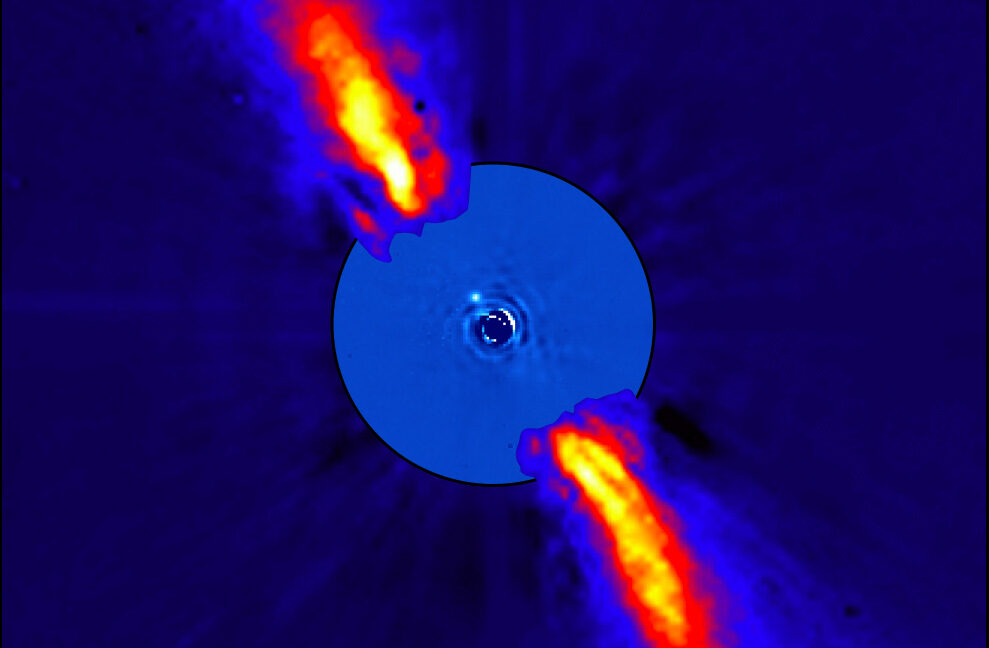
The James Webb Space Telescope has detected ice that appears to be older than the star it now circles. The finding points to a long and messy history for the raw material that eventually becomes planets. Ice can form in cold clouds of gas and dust well before a star ignites, and then get carried into a new system along with everything else.
Ice is central to planet formation. Frozen water and other compounds make up much of the material in comets and icy moons, and they help seed the solids that gather into planets. But this material does not sit untouched between its birth and its final home. Ultraviolet light and high-energy particles can break apart molecules and change the chemistry of a grain's surface. Collisions can grind, heat and mix material, erasing some of the original record and blending older matter with newer.
That mix is what makes the Webb result useful. Infrared observations pick up the spectral fingerprints of frozen molecules, so astronomers can in principle tell which signatures are primordial and which were rewritten later. An ice that predates its star suggests that some of a system's starting ingredients were already set before gravity pulled the surrounding cloud together, and that they carry a traceable history through every stage of processing.
The result also complicates the assumption that a planet's composition simply mirrors the chemistry of its star. If building materials are older than the star and have been reshaped by radiation and impacts along the way, a young system may be a patchwork rather than a clean snapshot. Planet-formation models will need to account for processing that happens in the cloud, in the disk and during the chaotic early period after a system takes shape.
Webb's infrared sensitivity suits this kind of work, because many ices are faint or invisible at shorter wavelengths. Follow-up observations will be needed to show whether similar ice ages turn up in other systems or whether this case is unusual. For now, the takeaway is that the ingredients for planets can be far older than the stars that host them.
Reporting based on an external source.